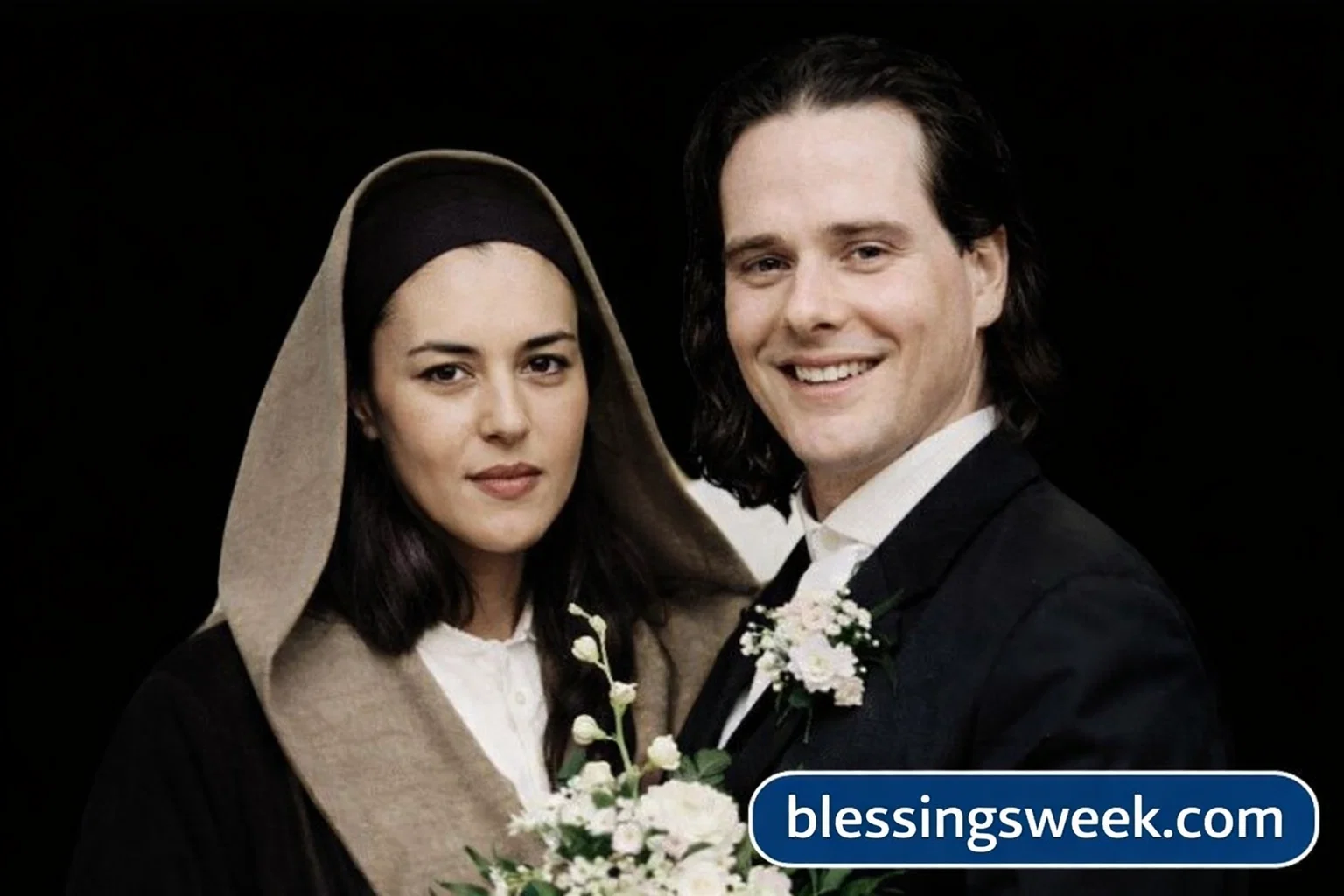
Claudio Carlos Basso Life and Photography Story
Who Exactly Is Claudio Carlos Basso?
Some names quietly move through the world of art and fashion without ever seeking the spotlight — and Claudio Carlos Basso is one of them. His name has been appearing with growing frequency across search engines, sparking curiosity among people who want to know the man behind the lens. Was he a celebrity? A public figure? Someone connected to a famous face? The answer touches on all three.
Claudio Carlos Basso is a fashion photographer and fine art photographer whose career unfolded across some of the most stylish cities in the world — Paris, France, Milan, Italy, and beyond. He built his name through disciplined craft, editorial campaigns for globally recognized publications, and a creative vision that valued emotion over spectacle. He is also widely recognized as the first husband of Italian actress Monica Bellucci, a connection that has kept his name alive in online conversations long after both have moved on with their separate lives. But to reduce him to just that one association would miss the fuller picture of who he actually is.
Quick Bio: Claudio Carlos Basso at a Glance
| Detail | Information |
|---|---|
| Full Name | Claudio Carlos Basso |
| Date of Birth | 1959 (exact date not confirmed) |
| Birthplace | Paris, France |
| Nationality | French-Italian |
| Profession | Fashion Photographer, Fine Art Photographer |
| Known For | Monica Bellucci’s first husband; editorial photography |
| Marriage | Married Monica Bellucci in 1990 |
| Divorce | Separated around 1994 |
| Publications | Vogue, Elle, Vanity Fair, Harper’s Bazaar |
| Current Status | Private; believed to reside in Europe |
| Net Worth | Not publicly disclosed |
Early Life, Roots, and the Making of an Artist
Claudio Carlos Basso was born in 1959 in Paris, France, into a family shaped by multicultural roots — a blend of French and Italian heritage that gave him a natural affinity for European aesthetics from a young age. His early life was spent absorbing the visual richness of Paris, a city that has long served as the crossroads of classical European art and modern creative culture.
Growing up with this kind of cultural immersion on both sides of his family lineage — Italian surname origin meeting Romance-language cultures and South American family connections — Basso developed a sensitivity to form, light, and human expression that would define his entire photographic career. He was not handed a camera and told to shoot. Instead, he arrived at photography the way most serious artists do: through curiosity, observation, and a quiet but persistent drive to translate what he saw into something lasting. By his late teens, he had already begun exploring the technical side of the visual arts, studying composition, lighting setups, and the emotional potential of a single frame.
The Start of a Photography Career in Fashion’s Heartland
Basso’s professional journey began in the competitive world of European fashion photography, where talent alone is rarely enough. He moved between Paris, France and Milan, Italy — the twin capitals of the fashion world — building relationships with boutique magazine collaborations and emerging designer collaborations that allowed him to develop both his portfolio and his reputation. These were not overnight wins. They were the result of consistent, focused work over years.
What set him apart early on was not just technical mastery, but his cinematic photography style and use of moody tones and sharp contrasts that gave his images an emotional weight beyond surface-level fashion imagery. He was less interested in simply showcasing a garment than in revealing something true about the person wearing it. His approach to fashion shoots leaned into:
- Authentic emotional expression over manufactured poses
- Careful use of light and shadow techniques to create depth
- A strong sense of artistic composition that felt painterly rather than commercial
- Sharp contrasts that gave his images a cinematic, film-like quality
This combination of skills made him highly sought after within the European fashion industry, long before his name became attached to any famous relationship.
Magazine Collaborations That Defined His Editorial Voice
At the height of his editorial career, Claudio Carlos Basso was working with some of the most prestigious names in global publishing. His photography appeared in the pages of Vogue, Elle, Vanity Fair, and Harper’s Bazaar — publications that do not open their pages to photographers who cannot consistently deliver both commercial appeal and artistic substance.
His editorial photography went beyond the expected. Each fashion editorial project carried a sense of narrative — a story told through framing, light, expression, and context. His subjects were not simply photographed; they were rendered. This distinction is what separates a working photographer from a genuinely influential one. Basso belonged to the latter category.
His visual storytelling approach resonated with editors and creative directors who wanted images that communicated something beyond the season’s trends. His work during this period helped shape what is now recognized as 1990s fashion aesthetics — a mood that valued emotional authenticity, aesthetic elegance, and the kind of quiet power that does not need to shout.
Meeting Monica Bellucci: A Professional Bond That Became Personal
Monica Bellucci began her modeling career in the late 1980s, moving from her hometown of Città di Castello in Italy to the fashion hubs of Milan and Paris. She was ambitious, striking, and in the process of building a modeling career that she hoped would eventually lead toward acting. It was during this period that she crossed paths with Claudio Carlos Basso.
They met on a fashion shoot — a setting where professional chemistry can rapidly evolve into something more personal when two people share a genuine passion for the craft. Basso saw in Bellucci not just a beautiful subject, but a woman with presence, depth, and a capacity for expression that his lens could bring out in powerful ways. He helped shape her early modeling image, giving her a visual identity that communicated sophistication and emotional range — qualities that would later serve her enormously well in her acting career.
Their relationship grew from that professional foundation into a whirlwind romance. By 1990, the two were married. At the time, Monica was 26 and Claudio was in his early 30s. It was a partnership built on shared artistic values, a mutual respect for the creative process, and the kind of intensity that comes naturally when two people are both deeply invested in the world of image-making.
Marriage, Life Together, and a Quiet Divorce
The four years of their marriage (1990–1994) were a formative period for both of them. They lived a life built around fashion shoots, creative projects, and the kind of travel that comes naturally to people whose careers are rooted in visual culture. Basso’s deep understanding of photography helped Bellucci develop an instinctive awareness of how to perform for a camera — a skill that directly shaped her career transition from modeling to acting.
However, creative differences and a growing lifestyle divergence began to create strain. Bellucci was on the edge of international stardom, drawn toward film, public life, and the global recognition that would eventually make her one of the most recognizable faces in world cinema. Basso, by contrast, preferred a quieter existence behind the lens — focused on his craft, private in his personal life, and largely uninterested in the machinery of celebrity.
Their separation around 1994 was handled with a respectful separation that drew almost no media attention. There were no public statements, no tabloid drama, and no apparent animosity. Monica has rarely spoken about Basso in interviews, and he has said even less. The quiet divorce was, in many ways, a reflection of both their characters — people who valued discretion and moved forward without making their personal lives into public spectacle. After their split, Bellucci went on to a long partnership with actor Vincent Cassel, with whom she had two daughters.
Life After Bellucci: The Private Road Continued
Following the divorce, Claudio Carlos Basso stepped further back from public life. He continued working as a photographer, but became more selective with his projects. The ambition that drives some artists toward fame and recognition was simply not his — and there is something genuinely admirable about a person who knows that about themselves and chooses accordingly.
He is believed to have continued living somewhere in Europe, possibly between France and Italy, maintaining the kind of low public profile that has become his defining personal characteristic. There is little to no active presence on social media — no verified Instagram account, no recent interviews, no public appearances at fashion weeks or industry events. For a man who spent years photographing some of the most watched moments in European fashion, his ability to simply disappear from public view is itself a kind of art.
Fine Art Photography, Exhibitions, and Artistic Legacy
Beyond his editorial work, Claudio Carlos Basso built a significant body of fine art photography that explored themes of identity, cultural heritage, and human experience. His portraiture work — intimate, carefully composed, and emotionally rich — has been exhibited across photography exhibitions in Europe, Latin America, and North America.
These exhibitions confirmed what editors already knew: Basso was not simply a hired gun pointing a camera at models. He was an artist using photography to ask questions about who people are, how they appear, and what it means to be seen. His fine art exhibitions earned him respect among industry insiders who understood the difference between a skilled technician and a genuine creative voice.
His artistic legacy lies not in fame but in influence. Photographers who came up after him, particularly those working in the space between fashion and fine art communities, often point to work from his era as a defining reference point. The emotional authenticity, the moody tones, the sense that each image contains an entire story — these are the qualities that endure.
Mentorship, Community, and Giving Back to Photography
One of the less publicized aspects of Claudio’s career is his commitment to photography mentoring and his participation in photography communities where he has supported emerging photographers. Through photography workshops and direct guidance, he has shared the kind of practical and creative knowledge that only comes from decades of real-world experience.
His approach to mentorship mirrors his approach to his own work: focused, honest, and free from ego. He emphasizes:
- The importance of developing a personal creative vision rather than copying trends
- Mastering photography techniques before relying on advanced cameras or editing software
- Building a professional photography network through genuine collaboration rather than self-promotion
- Maintaining artistic integrity even when commercial pressures push in the opposite direction
This commitment to creative collaboration and the development of a stronger photography community represents one of the quieter but more meaningful dimensions of his career.
Travel Photography and Family: A Different Kind of Story
In a different chapter of his life, Claudio Carlos Basso extended his photographic eye toward travel photography and family-centered travel. He collaborated with Elise Smith Caffee of 3 Kids Travel on projects that documented the experience of exploring the world as a family — blending his professional skill with a more personal, experiential learning approach to both travel and image-making.
These travel narratives and family travel projects showed a warmer, more accessible side of his work. Where his editorial photography was sharp and stylized, his travel photography leaned into the raw and unposed — landscapes, cultural moments, and family experiences captured with the same attention to light and emotion that defined everything he touched. It reflected a values-driven lifestyle that placed genuine human connection alongside professional craft.
Independent Publishing and Jumelle Press
Basso has also been connected to independent publishing projects, including work with Jumelle Press — an independent publisher focused on photography books and creative narratives. This collaboration allowed him to take full artistic control over how his work was presented and contextualized, free from the editorial mandates of large commercial magazines.
Independent publishing gave him the freedom to combine photography books with travel narratives and personal narrative in ways that commercial platforms rarely allow. The result was work that felt more complete — less a collection of individual images and more a coherent body of thought expressed through pictures and words.
Why Is Claudio Carlos Basso’s Name Suddenly Trending?
This is the question that brings many readers to this article in the first place. The answer has less to do with anything Basso himself has done recently and more to do with how search engines and digital culture work in the modern era.
His name appears across database listings, professional records, searchable records from his photography career, and references tied to Monica Bellucci’s biography. As online attention around Bellucci grows — through new film releases, interviews, or renewed public interest — searches naturally extend outward to include the people who shaped her early life and career. Basso’s name sits at the center of that web, surfacing through information indexing rather than any active public presence on his part.
This is also a case of identity confusion playing a role. “Claudio,” “Carlos,” and “Basso” are all individually common names in Romance-language cultures and Latin American heritage contexts. When combined, they create a distinctive but not unique identity — one that can sometimes be confused with other individuals in professional records or credential verification searches. Rising search interest around his name, in this context, is not evidence of controversy or scandal. It is simply the byproduct of digital age privacy meeting public curiosity in an era when almost everything is searchable.
The Digital Age, Privacy, and a Name That Stays Relevant
Claudio Carlos Basso’s situation reflects something worth understanding about how online visibility works for private individuals. A person does not need to be a celebrity to have name recognition online. They simply need to have existed in contexts — editorial photography, fashion industry records, published work, legal or professional documentation — that are now searchable by anyone with a browser.
His fragmented online references across multiple independent sources have created enough of a digital footprint that search engines register his name as relevant. This does not mean he is chasing attention. If anything, his consistent low public profile over the past three decades suggests the opposite. He has chosen the background deliberately, and the digital world has caught up to him anyway — not through scandal or spectacle, but through the slow accumulation of a life well-lived and well-documented by the ordinary machinery of the industries he worked in.
Conclusion
Claudio Carlos Basso is far more than a footnote in Monica Bellucci’s story. He is a skilled and emotionally intelligent photographer whose career spanned editorial photography, fine art, travel, and independent publishing across some of the world’s most culturally rich cities. His work with Vogue, Elle, Vanity Fair, and Harper’s Bazaar placed him at the center of global fashion photography during one of its most visually compelling eras. His role in shaping Bellucci’s early modeling image, his commitment to mentoring emerging photographers, and his quiet but enduring artistic legacy all speak to a life spent in genuine service of the craft. He chose privacy over fame, depth over visibility, and creative integrity over commercial recognition. In a world that rewards loudness, that choice itself says something worth remembering.
Frequently Asked Questions
1. Who is Claudio Carlos Basso? Claudio Carlos Basso is a French-Italian fashion photographer and fine art photographer born in Paris, France, in 1959. He is best known for his editorial work with major fashion magazines and for his brief marriage to Italian actress Monica Bellucci.
2. When did Claudio Carlos Basso marry Monica Bellucci? The two married in 1990, having met during a fashion shoot in the late 1980s. Their marriage lasted approximately four years before they separated quietly around 1994.
3. What magazines did Claudio Carlos Basso work with? Basso collaborated with several leading international publications including Vogue, Elle, Vanity Fair, and Harper’s Bazaar, contributing editorial photography that was recognized for its emotional depth and cinematic style.
4. Why is Claudio Carlos Basso appearing in online searches? His name surfaces due to a combination of factors — his connection to Monica Bellucci, his presence in professional and editorial records, database listings from his photography career, and the way search engines index fragmented online references over time.
5. Where is Claudio Carlos Basso now? As of 2025, Basso is believed to be living privately in Europe, likely in France or Italy. He maintains no active public social media presence and has avoided media attention consistently since the 1990s.